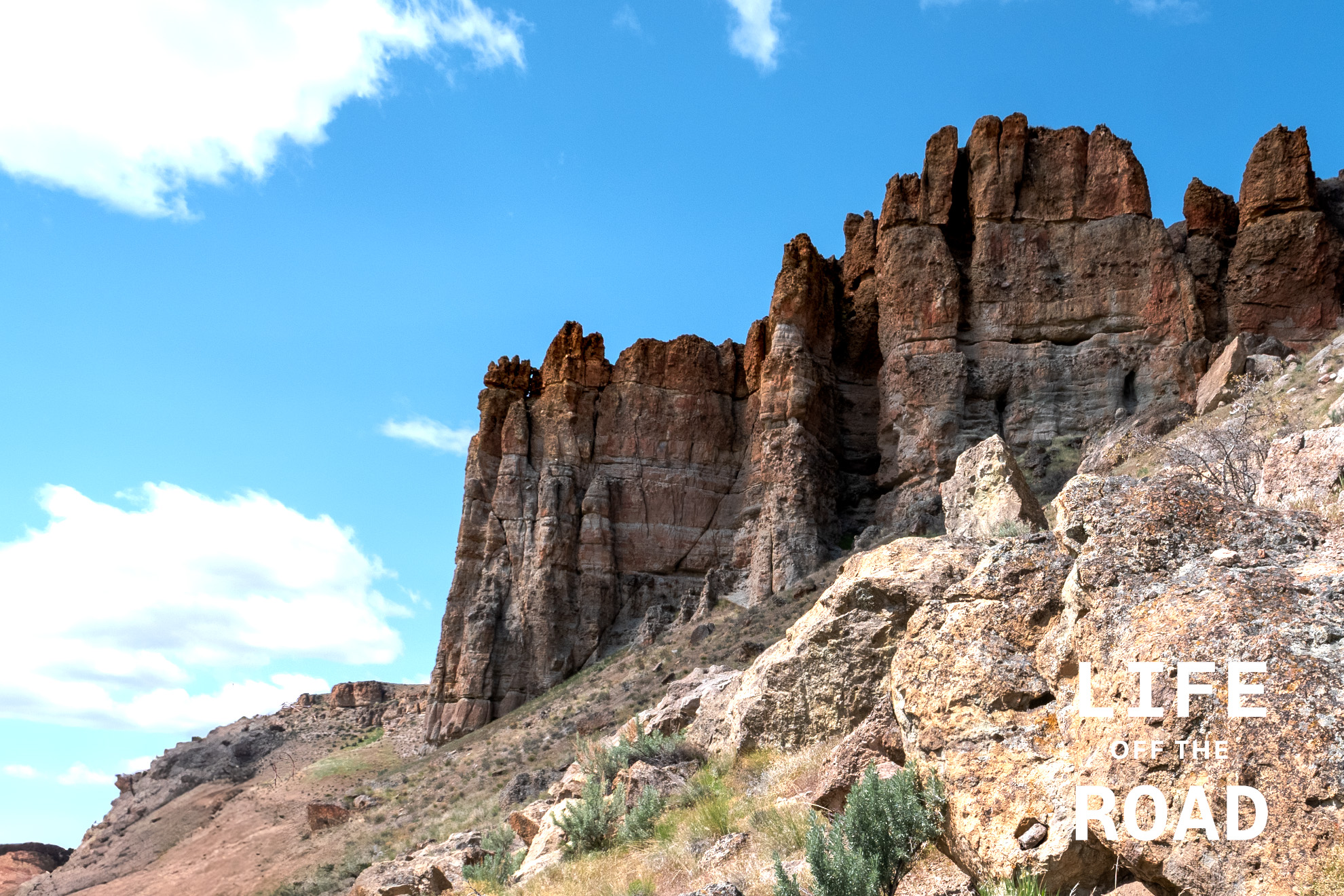
Imagine Eastern Oregon as a steamy, humid landscape filled with diverse plant life. That’s the scene the Clarno Unit’s fossils paint. The area’s unique geology, a result of volcanic activity, is the reason these fossils are so well-preserved. Massive volcanic mudflows, known as lahars, swept through the landscape, entombing plants, nuts, and even the remains of ancient mammals in their path. These events created a “snapshot” of a bygone ecosystem, capturing life in a moment of time.
Most people have heard about Oregon’s famous Painted Hills, but few venture outside that area of the John Day National Monument, to the Clarno or Sheep Rock units. The Clarno Unit is very compact, with easy trails that wind their way in and around rockfall from the tall spires of the ancient lahars, towering above. Numerous examples of the ancient flora and fauna can be seen captured in the ancient mudflows, along the trail. Numerous interpretive signs along the trails point to specific fossils features within the rock, or explain the natural conditions of the area, at the time. In this arid area of Oregon, it is difficult for us to imagine early elephants wandering about the forested savannah of what is now Eastern Oregon.